


Daily
Current Affairs Analysis
04 June
2024
-------------------------------------------------------------------------------------------------------------
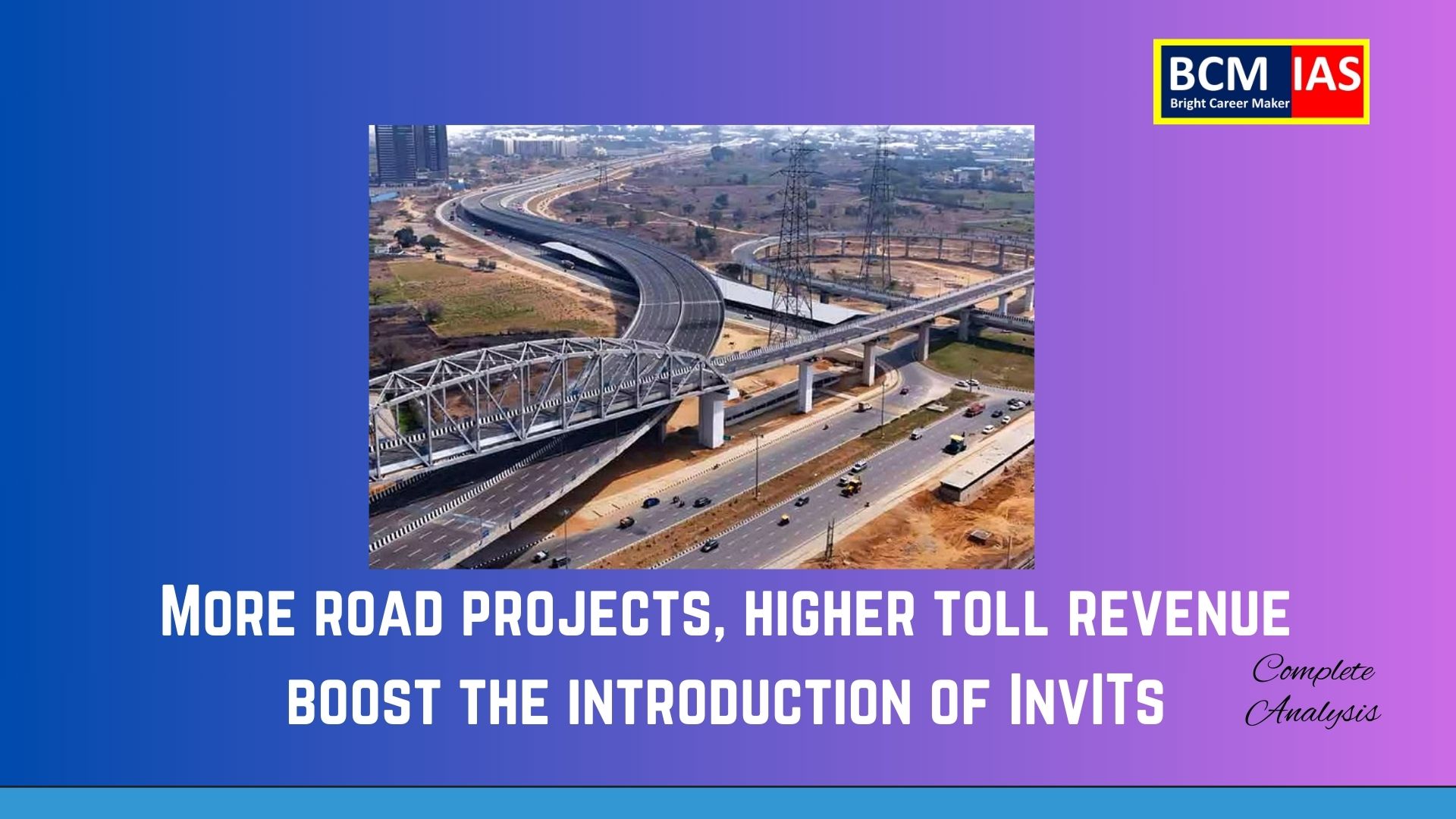
"More road projects, higher toll revenue boost
the introduction of InvITs"
Introduction
The article
"More road projects, higher toll revenue boost the introduction of
InvITs" by Janaki Krishnan discusses the increasing role of Infrastructure
Investment Trusts (InvITs) in India's road infrastructure sector. With the
faster pace of highway development and increased toll revenues in FY25, InvITs
are becoming major buyers of operational road assets. The National Highways
Authority of India (NHAI) is leveraging this trend to monetize its assets and
facilitate further road development projects.
Key Points
1. Growth of Road Projects and Toll Revenue:
o
Faster development of highways
in FY25.
o
Increased revenue from tolls
and toll hikes.
o
Road InvITs controlled over
10,000 km of road in FY24, expected to reach 22,500 km by FY28.
2. Role of InvITs:
o
Major buyers of operational
road assets.
o
Facilitating the unlocking of
capital for road developers.
o
Key investors include pension
funds and sovereign funds, indicating long-term investment horizons.
3. Asset Monetization by NHAI:
o
ICRA projects asset
monetization could fetch up to ₹60,000 crore in FY25.
o
Sale of 33 road assets through
toll-operate-transfer and InvIT modes.
o
Significant funding
opportunities, potentially translating into ₹38,000-43,000 crore.
4. Financial Projections and Toll Rates:
o
Fastag revenue spiked to
₹65,000 crore in FY24, expected to reach ₹77,000 crore in the current fiscal
year.
o
NHAI announced a 5% raise in
toll rates, enhancing revenue visibility.
o
SBI Caps estimates incremental
lending opportunity of ₹1 lakh crore annually by FY28.
5. Future Prospects:
o
More InvITs in the pipeline,
with new monetization programs expected.
o
Continued acquisition of
operational road assets to grow asset base.
Issues and
Opportunities in Road Infrastructure and InvITs
A. Role of
InvITs in Infrastructure Development:
- Capital Mobilization: InvITs
help in mobilizing capital for infrastructure projects, enabling
developers to unlock funds tied up in operational assets.
- Long-term Investments:
Attracting long-term investors like pension funds and sovereign funds,
which provides stability and ensures sustained funding.
B. Financial
Mechanisms and Revenue Generation:
- Toll Revenue: Increased toll revenue
from existing and new projects enhances the financial viability of road
projects.
- Asset Monetization: NHAI's
strategy to monetize assets through InvITs and toll-operate-transfer
models provides significant funding opportunities for further development.
C. Regulatory
and Policy Framework:
- Government Support:
Supportive government policies and regulatory frameworks are crucial for
the successful implementation and scaling of InvITs.
- Transparency and Accountability:
Ensuring transparency in operations and accountability in fund management
to gain investor confidence.
D. Challenges
in Implementation:
- Market Risks: Market risks such as
fluctuations in toll revenue, regulatory changes, and economic downturns
can impact the performance of InvITs.
- Operational Efficiency:
Ensuring operational efficiency and maintaining infrastructure quality are
critical for the long-term success of InvITs.
Strategies
for Enhancing the Role of InvITs in Infrastructure Development
A.
Strengthening Policy and Regulatory Frameworks:
- Stable Policies: Establishing stable and
consistent policies to encourage investment in InvITs.
- Regulatory Oversight:
Strengthening regulatory oversight to ensure transparency and protect
investor interests.
B. Enhancing
Financial Attractiveness:
- Revenue Assurance:
Implementing measures to assure revenue generation, such as regular toll
rate revisions and efficient toll collection mechanisms.
- Risk Mitigation: Developing strategies
to mitigate market risks, including diversified investment portfolios and
hedging mechanisms.
C. Promoting
Investor Confidence:
- Information Transparency:
Ensuring transparency in financial disclosures and operational performance
to build investor trust.
- Stakeholder Engagement:
Engaging with stakeholders, including investors, developers, and
government agencies, to align interests and ensure collaborative efforts.
D. Capacity
Building and Infrastructure Maintenance:
- Training and Development:
Investing in capacity building for efficient management and operation of
infrastructure projects.
- Regular Maintenance:
Ensuring regular maintenance of infrastructure assets to sustain quality
and operational efficiency.
Way Forward
A. Expanding
the Scope of InvITs
- Diversification: Expanding the scope of
InvITs to include other infrastructure sectors such as railways, ports,
and urban infrastructure.
- Innovative Financial Instruments:
Developing innovative financial instruments and models to attract a
broader range of investors.
B. Enhancing
Public-Private Partnerships
- Collaborative Models:
Promoting collaborative models between the public and private sectors to
leverage the strengths of both.
- Policy Incentives:
Providing policy incentives to encourage private sector participation in
infrastructure development.
C. Leveraging
Technology for Efficiency
- Digital Solutions:
Implementing digital solutions for toll collection, project monitoring,
and maintenance to enhance efficiency.
- Data Analytics: Utilizing data
analytics to optimize operations and make informed investment decisions.
D.
Sustainable and Inclusive Development
- Environmental Considerations:
Incorporating environmental sustainability into infrastructure development
plans.
- Inclusive Growth:
Ensuring that infrastructure development benefits all sections of society,
including marginalized communities.
E.
International Cooperation
- Global Partnerships:
Establishing global partnerships to share best practices, attract foreign
investments, and enhance technical capabilities.
- Learning from Global Models:
Learning from successful global models of infrastructure financing and
implementation to improve domestic practices.
In
conclusion, the role of InvITs in India's road infrastructure sector is crucial
for mobilizing capital, enhancing revenue generation, and facilitating
sustainable development. By strengthening policy frameworks, promoting investor
confidence, enhancing financial attractiveness, and ensuring operational
efficiency, InvITs can significantly contribute to the growth of India's
infrastructure. The way forward involves expanding the scope of InvITs,
promoting public-private partnerships, leveraging technology, and focusing on
sustainable and inclusive development.
MCQs for Practice
1. What is the main role of InvITs in India's road infrastructure sector?
o
A) To construct new roads
o
B) To mobilize capital for
infrastructure projects
o
C) To regulate toll rates
o
D) To oversee road maintenance
o
Answer: B
o
Explanation: InvITs
primarily help in mobilizing capital for infrastructure projects by allowing
investors to pool their resources.
2. What is the projected revenue from Fastag in FY24 according to the
article?
o
A) ₹50,000 crore
o
B) ₹55,000 crore
o
C) ₹65,000 crore
o
D) ₹75,000 crore
o
Answer: C
o
Explanation: The
projected revenue from Fastag in FY24 is ₹65,000 crore.
3. What is the estimated total road length controlled by InvITs by FY28?
o
A) 15,000 km
o
B) 20,000 km
o
C) 22,500 km
o
D) 25,000 km
o
Answer: C
o
Explanation: InvITs are
expected to control 22,500 km of road length by FY28.
4. Which organizations are mentioned as key investors in InvITs?
o
A) Mutual funds
o
B) Pension funds and sovereign
funds
o
C) Commercial banks
o
D) Insurance companies
o
Answer: B
o
Explanation: Pension
funds and sovereign funds are key investors in InvITs due to their long-term
investment horizon.
5. What financial opportunity does NHAI's asset monetization in FY25
potentially translate into?
o
A) ₹20,000-25,000 crore
o
B) ₹30,000-35,000 crore
o
C) ₹38,000-43,000 crore
o
D) ₹50,000-55,000 crore
o
Answer: C
o
Explanation: NHAI's
asset monetization in FY25 could potentially translate into a ₹38,000-43,000
crore funding opportunity.
Probable Question for UPSC Mains Exam
Question:
Discuss the role of Infrastructure Investment Trusts (InvITs) in enhancing road
infrastructure development in India.
Model Answer
for UPSC Civil Services Mains Exam-
1.
Introduction
Infrastructure
development is a cornerstone of economic growth, providing the necessary
foundation for various economic activities. In India, the development of road
infrastructure has seen a significant boost in recent years, driven by both
public and private sector investments. One of the key instruments facilitating
this growth is the Infrastructure Investment Trust (InvIT). InvITs are
collective investment vehicles that pool resources from various investors to
fund infrastructure projects, offering returns generated from the assets they
invest in. This essay explores the role of InvITs in enhancing road
infrastructure development in India, the associated challenges, and the way
forward.
2. Demand of
the Question
Role of
InvITs in Road Infrastructure Development
A. Capital
Mobilization and Investment:
- Pooling of Resources: InvITs
pool capital from a diverse set of investors, including pension funds,
insurance companies, and retail investors. This aggregation of funds
facilitates large-scale investments in road infrastructure projects.
- Unlocking Value: By allowing road
developers to monetize operational assets, InvITs help unlock the value
tied up in these assets. This enables developers to reinvest the proceeds
into new projects, thereby expanding the infrastructure base.
B. Revenue
Generation and Financial Stability:
- Toll Revenue: Increased toll revenue
from existing road projects enhances the financial viability of InvITs.
Higher toll collections provide steady income streams that can be
distributed to investors as returns.
- Long-term Investments: InvITs
attract long-term investors, such as pension funds and sovereign funds,
who seek stable and predictable returns. This long-term horizon aligns
well with the extended payback periods typical of infrastructure projects.
C. Efficiency
and Professional Management:
- Professional Management: InvITs
are managed by professional fund managers who bring expertise in asset
management and operational efficiency. This professional oversight ensures
that the road assets are maintained and operated efficiently.
- Risk Diversification: By
investing in a portfolio of road projects, InvITs diversify risk, reducing
the impact of any single project's underperformance on the overall
returns.
Challenges
and Policy Implications
A. Market and
Operational Risks:
- Revenue Fluctuations: Toll
revenue can be subject to fluctuations due to changes in traffic volumes,
economic conditions, and regulatory policies. This uncertainty can impact
the returns generated by InvITs.
- Operational Challenges:
Ensuring the efficient operation and maintenance of road assets is
critical. Any lapses can affect the quality and safety of the
infrastructure, leading to reduced user satisfaction and lower toll
collections.
B. Regulatory
and Policy Framework:
- Policy Stability: A
stable and predictable policy environment is essential to attract and
retain investment in InvITs. Frequent changes in toll policies, taxation,
and regulatory requirements can deter investors.
- Regulatory Oversight:
Effective regulatory oversight is necessary to ensure transparency,
protect investor interests, and maintain confidence in InvITs. This
includes robust disclosure requirements and performance monitoring.
C. Financial
and Economic Considerations:
- Financing Costs: The cost of financing
can impact the overall returns from InvITs. High-interest rates or
unfavorable financing terms can reduce the attractiveness of these
investment vehicles.
- Economic Impact: The broader economic
environment, including factors such as GDP growth, inflation, and
infrastructure demand, influences the performance of InvITs. A sluggish
economy can lead to lower traffic volumes and reduced toll revenue.
3. Way
Forward
A. Enhancing
Policy and Regulatory Framework
- Stable Policies: Ensuring stable and
consistent policies regarding toll rates, taxation, and regulatory
requirements to foster a conducive environment for InvITs. Predictability
in policies enhances investor confidence and long-term planning.
- Strengthening Oversight:
Enhancing regulatory oversight to ensure transparency, accountability, and
protection of investor interests. Robust regulatory frameworks
build trust and ensure the sustainable growth of InvITs.
B. Promoting
Financial Attractiveness
- Revenue Assurance Mechanisms:
Implementing mechanisms to assure revenue generation, such as regular toll
rate adjustments and efficient toll collection systems. Assured revenue
streams attract more investors and enhance financial viability.
- Mitigating Risks:
Developing strategies to mitigate market and operational risks, including
diversification of assets and comprehensive risk management practices. Effective
risk management ensures stability and resilience against market
fluctuations.
C. Building
Investor Confidence
- Transparency in Operations:
Ensuring transparency in financial disclosures and operational performance
to build investor trust. Clear and transparent communication
fosters a positive investment climate.
- Stakeholder Engagement:
Engaging with stakeholders, including investors, developers, and
government agencies, to align interests and ensure collaborative efforts. Active
stakeholder engagement promotes shared objectives and collective
growth.
D. Expanding
Scope and Scale
- Diversification: Expanding the scope of
InvITs to include other infrastructure sectors such as railways, ports,
and urban infrastructure. Diversified investment portfolios spread
risk and enhance overall returns.
- Innovative Financial Instruments:
Developing innovative financial instruments and models to attract a
broader range of investors. Financial innovation widens access and
participation in infrastructure investments.
E. Leveraging
Technology for Efficiency
- Digital Solutions:
Implementing digital solutions for toll collection, project monitoring,
and maintenance to enhance efficiency. Technology integration
improves operational efficiency and reduces costs.
- Data Analytics: Utilizing data
analytics to optimize operations and make informed investment decisions. Data-driven
decision-making enhances performance and strategic planning.
F.
Sustainable and Inclusive Development
- Environmental Sustainability:
Incorporating environmental sustainability into infrastructure development
plans. Sustainable practices ensure long-term viability and reduce
environmental impact.
- Inclusive Growth:
Ensuring that infrastructure development benefits all sections of society,
including marginalized communities. Inclusive development promotes
equity and social well-being.
G.
International Cooperation
- Global Partnerships:
Establishing global partnerships to share best practices, attract foreign
investments, and enhance technical capabilities. International
collaboration enriches knowledge and resources.
- Learning from Global Models:
Learning from successful global models of infrastructure financing and
implementation to improve domestic practices. Adopting global best
practices enhances local capabilities and performance.
In
conclusion, Infrastructure Investment Trusts (InvITs) play a crucial role in
enhancing road infrastructure development in India by mobilizing capital,
generating revenue, and ensuring professional management of assets. Addressing
the challenges and leveraging opportunities requires a multi-faceted approach,
including strengthening policy frameworks, promoting investor confidence,
enhancing financial attractiveness, and ensuring sustainable and inclusive
development. By adopting these strategies, India can harness the full potential
of InvITs to drive infrastructure growth and economic development.


Comments on “"More road projects, higher toll revenue boost the introduction of InvITs"”